What Is the Difference Between TM, SM, and ®?
Learn the difference between TM, SM, and ®, including when each symbol is used, what legal protection it represents, and why trademark registration matters for global brands.
Before discussing the symbols TM, SM, and ®, it is helpful to understand what a trademark means.
People sometimes use the words “trademark” and “brand” as if they mean the same thing. However, they are not exactly identical.
A brand represents the overall image, reputation, products, and customer experience of a business. A trademark is a name, symbol, logo, phrase, or design that identifies and distinguishes specific goods or services.
01. TM — Trademark
TM is short for “trademark.” It is commonly used with an unregistered trademark related to goods or products, such as clothing, electronics, cosmetics, or packaging.
Using the TM symbol generally means that the owner is claiming rights in the name, logo, or design. It does not necessarily mean that the trademark has been officially registered.
For example, a new brand may place TM next to its name on product packaging while preparing or waiting for a trademark application.
In some countries, including the United States, continued commercial use may create certain unregistered or common-law rights. However, the level of protection is usually more limited than that provided by official registration.
TM is mainly used to show that a business is claiming rights over a trademark for goods, even if the mark has not yet been officially registered.
02. SM — Service Mark
SM is short for “service mark.” It is used for an unregistered mark that identifies services rather than physical products.
Examples may include education and training, hotel services, consulting, online platforms, advertising, and financial services.
Like TM, SM mainly communicates that the business is claiming rights over the mark. It does not by itself prove that the mark has been officially registered.
SM is used mainly in certain countries, especially the United States. In international business, many companies prefer to use TM as a general symbol, even when their activities include both products and services.
SM is specifically intended for unregistered service marks, but it is less commonly used worldwide than TM.
03. ® — Registered Trademark
® stands for “Registered Trademark.” It indicates that a trademark has been officially registered with the relevant trademark authority.
Depending on the country or region, registration may be handled by an official organization such as the China National Intellectual Property Administration or the United States Patent and Trademark Office.
A registered trademark may receive stronger legal protection in the jurisdiction where it has been registered. The owner may have greater ability to challenge infringement, stop unauthorized use, and seek compensation according to local law.
Trademark registration is generally territorial. Registration in one country does not automatically protect the trademark in every other country. Businesses that operate internationally may need to apply for protection in additional markets.
Important: The ® symbol should only be used where the trademark has been officially registered. Using ® for an unregistered trademark may create legal risks, depending on the laws of the relevant country or region.
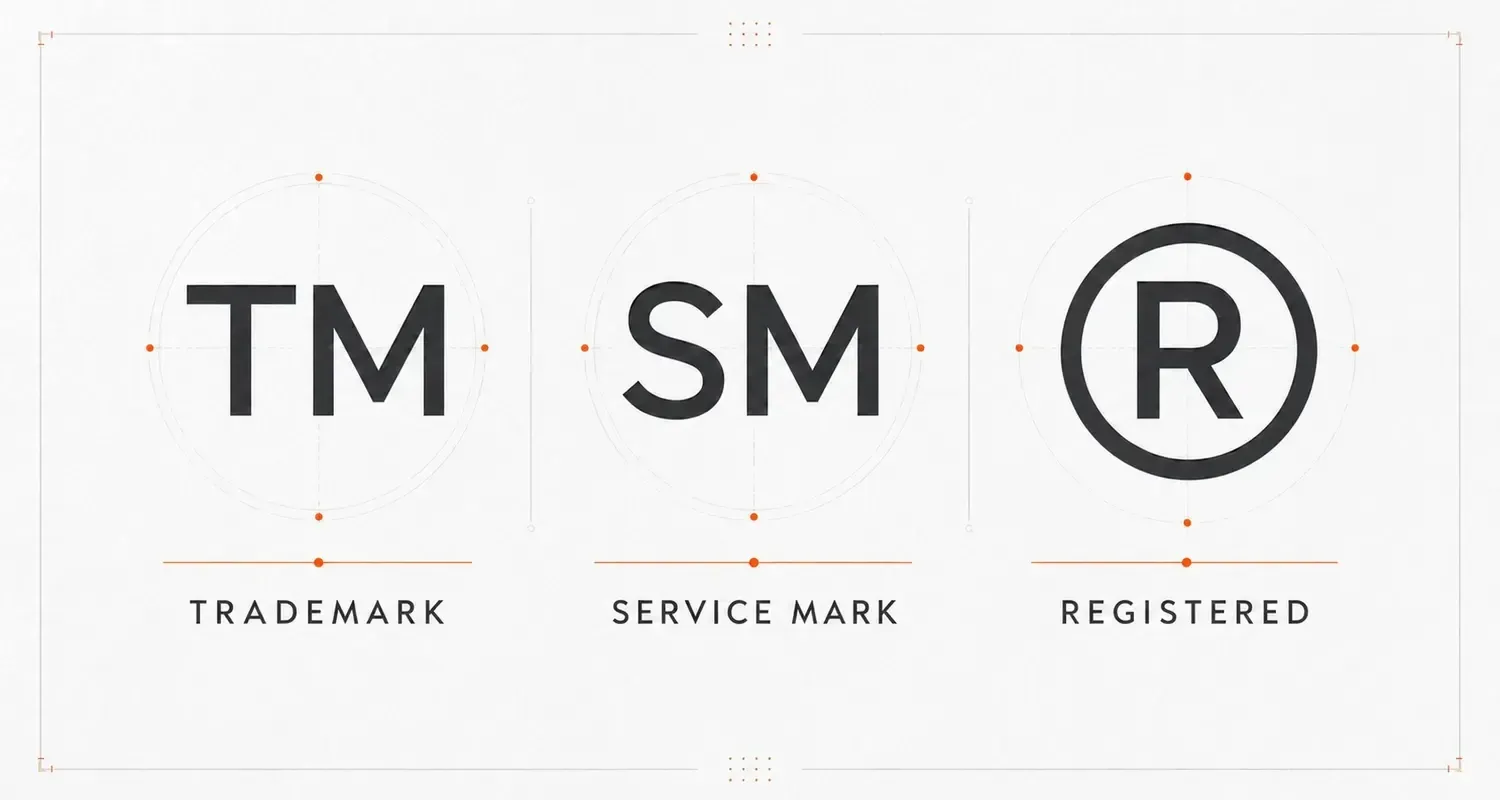
TM, SM, and ® at a Glance
- TM: Usually used for an unregistered trademark related to goods.
- SM: Usually used for an unregistered trademark related to services.
- ®: Used only for a trademark that has been officially registered in the relevant jurisdiction.
Which Symbol Should a Brand Use?
If a brand name or logo has not yet been officially registered, the owner may consider using TM for products or SM for services, subject to local laws and business practices.
Once the trademark has been successfully registered, the owner may use ® in the country or region covered by that registration.
For international brands, trademark status should be checked separately in each target market. A symbol that is appropriate in one country may have different legal requirements in another.
Understanding these three symbols helps businesses present their brand more accurately and avoid unnecessary trademark risks.